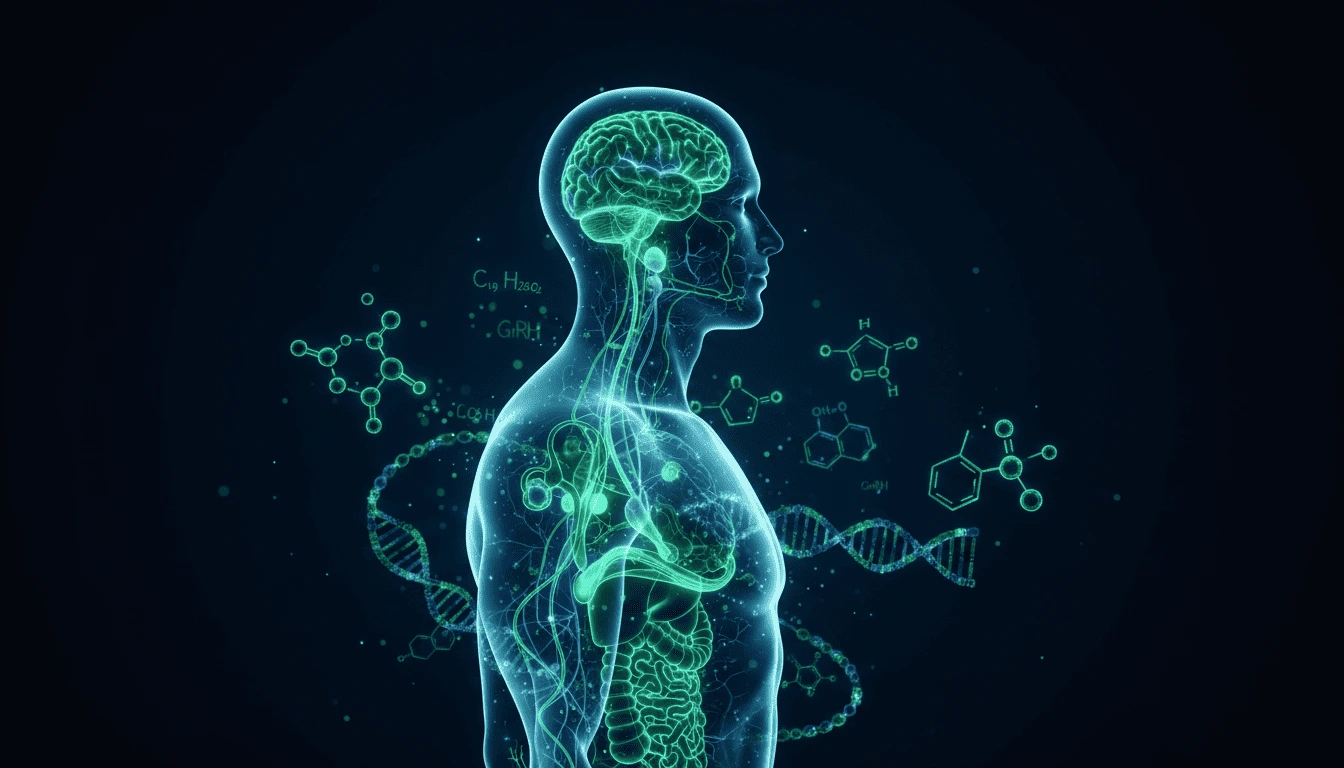
Testosterone is one of the most discussed hormones in men's health — and one of the most misunderstood. For many men, it registers as a vague concept associated with muscles and masculinity, but the actual biology is considerably more interesting and more relevant to daily life than most people appreciate.
This guide is designed as a clear, jargon-minimized primer on testosterone and the male hormonal system. Understanding how it works puts you in a far better position to make informed decisions about your health.
What Is Testosterone?
Testosterone is a steroid hormone — a class of hormones derived from cholesterol. It belongs to a family of hormones called androgens, which are responsible for the development and maintenance of male characteristics. While often described as "the male hormone," testosterone is also produced in smaller amounts in women by the ovaries and adrenal glands, where it plays roles in libido, bone density, and energy.
In men, testosterone is produced primarily in the Leydig cells of the testes (approximately 95% of total production) with a small contribution from the adrenal glands. It circulates through the bloodstream to virtually every tissue in the body, where it binds to androgen receptors and triggers gene expression relevant to that tissue's function.
How the Body Produces Testosterone
Testosterone production is regulated by a sophisticated feedback loop called the Hypothalamic-Pituitary-Gonadal (HPG) axis:
- The hypothalamus (a region of the brain) detects that testosterone levels are low and releases Gonadotropin-Releasing Hormone (GnRH).
- GnRH signals the pituitary gland to release Luteinizing Hormone (LH) and Follicle-Stimulating Hormone (FSH) into the bloodstream.
- LH travels to the testes, where it signals the Leydig cells to synthesize testosterone from cholesterol.
- As testosterone levels rise in the bloodstream, the hypothalamus and pituitary detect this and reduce their stimulatory signals — preventing overproduction.
This negative feedback mechanism keeps testosterone within its normal physiological range. When external testosterone (or testosterone-mimicking compounds) is introduced into the body, the brain detects elevated levels and suppresses its own production signals — which is one reason why external testosterone use can suppress natural production.
Total Testosterone vs. Free Testosterone
When testosterone enters the bloodstream, approximately 98% of it is bound to carrier proteins — primarily Sex Hormone-Binding Globulin (SHBG) and albumin. Bound testosterone is not directly biologically active. Only the remaining 1–2% of testosterone that circulates unbound — called free testosterone — can freely enter cells and exert its effects on tissue.
This distinction matters clinically. A man may have "normal" total testosterone but low free testosterone if his SHBG levels are high, resulting in less testosterone available to tissues. This is why comprehensive hormonal assessment often measures both total testosterone and free testosterone (or SHBG) to get a complete picture.
What Testosterone Does in the Body
Testosterone's influence extends to nearly every major biological system:
- Reproductive system: Drives the development of male sexual characteristics, sperm production, and libido.
- Musculoskeletal system: Stimulates muscle protein synthesis, supports muscle mass maintenance, and promotes bone mineral density.
- Cardiovascular system: Influences red blood cell production, vascular tone, and cardiac muscle function.
- Brain and nervous system: Affects mood, cognitive function, memory, motivation, and risk-taking behavior through androgen receptors in multiple brain regions.
- Metabolic system: Regulates fat distribution (favoring lean mass over fat storage), insulin sensitivity, and overall energy metabolism.
- Immune function: Has complex bidirectional interactions with immune system regulation.
Other Important Male Hormones
While testosterone gets most of the attention, several other hormones play critical roles in male health:
- DHT (Dihydrotestosterone): A more potent androgen derived from testosterone via the enzyme 5-alpha reductase. Important for prostate health, hair follicle behavior, and certain developmental functions.
- Estradiol (Estrogen): Men do produce estrogen — primarily through the conversion of testosterone via aromatase enzyme in fat tissue. Estrogen in men plays important roles in bone density, cardiovascular health, and sexual function. The ratio of testosterone to estrogen is more important than absolute levels of either.
- Cortisol: The primary stress hormone. As discussed in our article on stress and testosterone, cortisol and testosterone operate in opposition — chronic cortisol elevation suppresses testosterone production.
- Growth Hormone (GH): Secreted primarily during deep sleep, GH supports tissue repair, muscle growth, fat metabolism, and has complex interactions with testosterone signaling.
- LH and FSH: The signaling hormones from the pituitary that regulate testosterone production and sperm development in the testes.
Normal Testosterone Levels
Reference ranges for testosterone vary somewhat between laboratories and testing methodologies, but a general framework for total testosterone in adult men is:
- Normal range: Approximately 300 to 1,000 ng/dL (nanograms per deciliter)
- Optimal range: Many clinicians consider levels between 500 and 800 ng/dL as functionally optimal for most adult men
- Low testosterone (hypogonadism): Generally defined as levels below 300 ng/dL, accompanied by symptoms
It's important to note that testosterone levels fluctuate throughout the day — peaking in the morning hours (typically 7–9 AM) and declining by 30–40% by evening. For this reason, blood tests for testosterone are typically conducted in the morning.
How Testosterone Changes with Age
Testosterone production peaks during the late teens and early twenties. After approximately age 30, total testosterone declines at a rate of roughly 1% to 2% per year on average. This gradual decline is normal and expected — but its rate and extent are significantly influenced by lifestyle factors.
Many of the symptoms commonly attributed to "just getting older" — persistent fatigue, reduced drive, difficulty maintaining muscle, mood changes — are at least partly attributable to this hormonal trajectory rather than age itself. The distinction matters because the trajectory is influenceable through lifestyle, nutrition, and targeted support.
Factors That Influence Testosterone
Both upward and downward influences on testosterone are well-documented:
Factors that support healthy testosterone: Resistance training, adequate sleep (7–9 hours), stress management, zinc and Vitamin D sufficiency, healthy body weight, healthy fat intake, adaptogenic herbs (Ashwagandha, Tongkat Ali, Fenugreek).
Factors that suppress testosterone: Chronic sleep deprivation, sedentary lifestyle, excess body fat, chronic psychological stress, alcohol, very low fat dieting, BPA exposure, Vitamin D deficiency. See our related article on habits that negatively affect testosterone for a detailed breakdown.
Natural Support for Healthy Testosterone
Understanding testosterone's biology makes the rationale behind natural support strategies clear. The HorseWood formula was designed with this physiology in mind — addressing the nutritional gaps (Zinc, Vitamin D3) most likely to impair testosterone synthesis, and incorporating traditional botanicals (Ashwagandha, Tongkat Ali, Maca Root, Fenugreek, Tribulus) with documented relevance to male hormonal health and vitality.
Supplementation is not a replacement for the lifestyle foundations covered throughout this blog. But as a complement to quality sleep, regular exercise, and a nutrient-rich diet, a targeted daily formula like HorseWood provides the additional nutritional and botanical support that can meaningfully amplify your results over time.