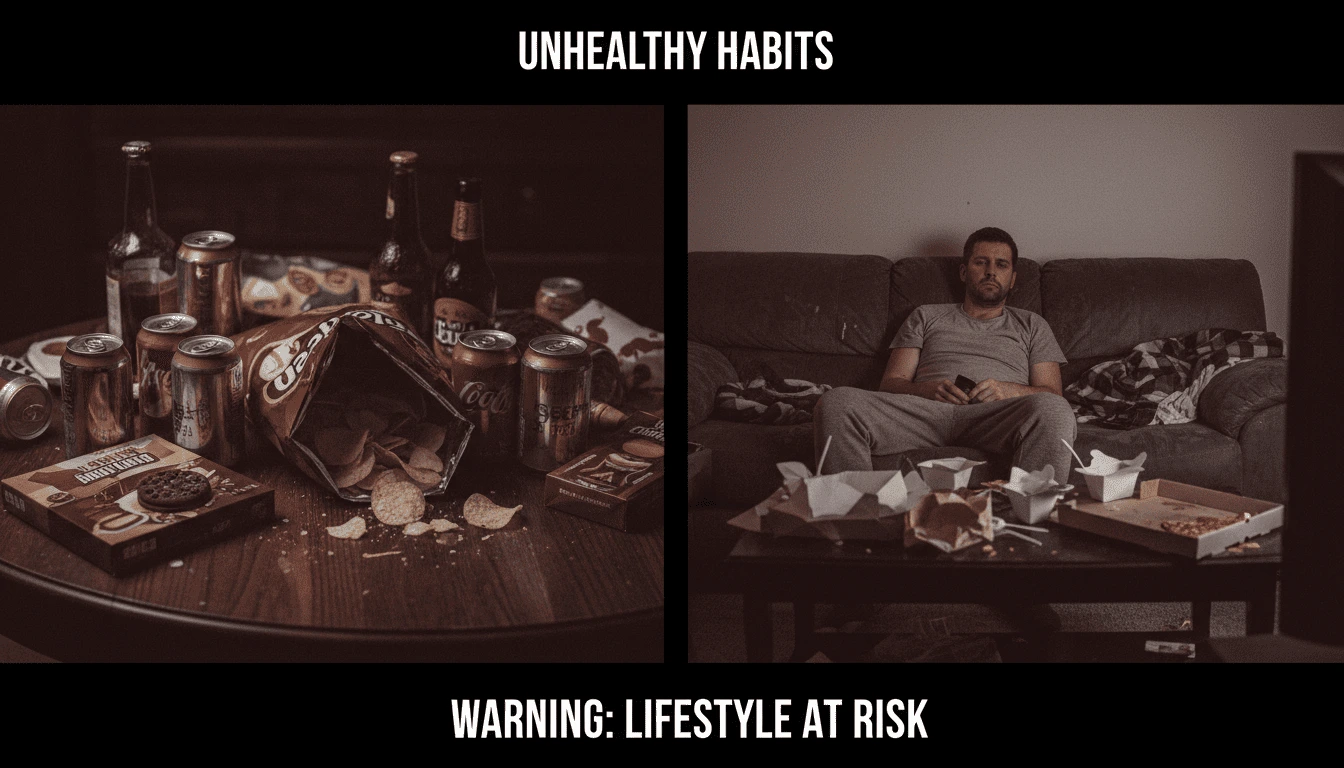
Building on our guide to habits that support male health, this article examines the other side of the equation — the everyday behaviors that silently work against healthy testosterone levels. Many of these are so normalized in modern life that men rarely question them. But their hormonal impact is real and cumulative.
Understanding which habits are undermining your hormonal health is the first step toward making targeted changes that genuinely move the needle.
1. Chronic Sleep Deprivation
The research on this is unambiguous. A study published in the Journal of the American Medical Association found that young healthy men who slept five hours per night for one week showed testosterone levels 10 to 15 percent lower than their well-rested baseline. That's a meaningful reduction from one week of poor sleep — extrapolate that over months or years and the cumulative impact on hormonal health becomes significant.
Sleep is not passive rest — it's the primary window for testosterone production, recovery, and cellular repair. Treating it as negotiable is one of the most counterproductive decisions a man can make for his hormonal health. Aim for 7 to 9 hours of quality sleep per night without exception.
2. A Sedentary Lifestyle
Physical inactivity is one of the most powerful suppressors of testosterone in modern men. The human body upregulates testosterone production in response to physical demand — specifically the anabolic signal of resistance training. Without that signal, testosterone production receives no incentive to remain robust.
Men who spend the majority of their waking hours seated — working at desks, commuting, watching television — and engage in no structured resistance training consistently show lower testosterone levels than active peers of the same age. The fix is not complicated: begin a consistent resistance training program with compound movements and progressive overload.
3. Regular Alcohol Consumption
Alcohol impairs testosterone at multiple levels. Acutely, it suppresses the signaling between the brain and the testes that triggers testosterone production. Chronically, it damages the Leydig cells responsible for testosterone synthesis. It also disrupts sleep architecture — reducing the deep sleep stages where testosterone production is highest — and elevates cortisol, adding another suppressive layer.
Nightly drinking, even at what culturally feels like "moderate" levels, is a consistent hormonal drain. Men serious about optimizing testosterone should honestly evaluate their weekly alcohol intake and consider significant reduction.
4. Eating a High-Sugar, Ultra-Processed Diet
Diets high in refined carbohydrates and sugar chronically elevate blood glucose and insulin levels. Research has documented an inverse relationship between insulin and testosterone — elevated insulin creates a hormonal environment that suppresses testosterone biosynthesis. Ultra-processed foods also tend to be low in zinc, magnesium, and healthy fats — the nutrients most directly involved in testosterone production.
Replacing processed foods with whole foods rich in protein, healthy fats, and micronutrients is not just good general health advice — it's targeted hormonal support.
5. Chronic Unmanaged Stress
Cortisol — the primary stress hormone — and testosterone operate in opposition. When cortisol is chronically elevated due to unmanaged psychological stress, testosterone production is suppressed both at the level of the brain (hypothalamic-pituitary axis) and at the level of the testes. Men experiencing high chronic stress consistently show lower testosterone profiles in population research.
Stress management is not optional for men who care about hormonal health. Regular exercise, adequate sleep, breathwork, social connection, and addressing the root sources of chronic stress are all necessary components of a hormonal optimization strategy.
6. Carrying Excess Body Fat
Adipose tissue (body fat) contains the enzyme aromatase, which converts testosterone to estrogen. Higher body fat — particularly visceral abdominal fat — means more active aromatase activity, more testosterone converted to estrogen, and a lower free testosterone level in circulation. This creates a self-reinforcing cycle: lower testosterone makes fat loss harder; more fat further suppresses testosterone.
Breaking this cycle requires a patient, consistent approach to sustainable fat loss through progressive resistance training and modest dietary adjustments, rather than crash dieting — which suppresses testosterone through its own mechanisms.
7. Very Low Fat Dieting
Testosterone is a steroid hormone synthesized from cholesterol. Dietary fats provide the cholesterol building blocks for this synthesis. Men following extremely low-fat diets — under 20% of calories from fat — consistently show lower testosterone levels than those consuming adequate healthy fats. This is one reason why the low-fat dietary trend of the 1980s and 1990s was associated with declining male hormone profiles across populations.
The solution is not to eat unhealthy amounts of saturated fat, but to ensure adequate intake of healthy monounsaturated and saturated fats through foods like eggs, avocados, olive oil, nuts, and quality animal proteins.
8. Overtraining Without Adequate Recovery
Exercise is testosterone-supportive — but overtraining is not. When men push training volume and intensity beyond their recovery capacity — exercising intensely six or seven days per week without adequate sleep, nutrition, and rest days — cortisol rises and testosterone falls. Overtraining syndrome is a recognized physiological state associated with hormonal disruption, chronic fatigue, and performance decline.
More is not always better. The principle of progressive overload must be balanced with deliberate recovery. Three to four resistance training sessions per week, with adequate protein and sleep, produces better hormonal outcomes than seven days of exhaustive training.
9. Exposure to Plastics and Xenoestrogens
BPA (bisphenol A) and certain phthalates found in plastics, food packaging, and some personal care products act as endocrine disruptors — compounds that mimic estrogen in the body and can interfere with testosterone signaling. Multiple studies have documented associations between urinary BPA levels and lower testosterone in men.
Practical reduction strategies include: using glass, stainless steel, or ceramic containers for food and drink storage; avoiding microwaving food in plastic containers; choosing personal care products free of parabens and synthetic fragrances; and eating less food from metal cans with BPA linings.
10. Vitamin D Deficiency
Vitamin D deficiency is remarkably common among men in northern latitudes or those who work primarily indoors — estimated to affect 40% or more of the adult U.S. population. Vitamin D receptors are present in the Leydig cells of the testes, and research has found consistent positive correlations between Vitamin D levels and testosterone in men.
Correcting Vitamin D deficiency — through sun exposure and/or supplementation with Vitamin D3 — is one of the simplest and most evidence-supported interventions for supporting healthy testosterone in men who are deficient. HorseWood includes Vitamin D3 specifically for this reason.